My first cruise was on the Norwegian Windward in 1993 - I was a teenager, and the highlight was sharing my first beer with my dad at a bar in Mexico. The ship was tiny, the entertainment was shuffleboard, and honestly it was kind of boring. But it was also my introduction to something I didn't fully appreciate until decades later: the magic of going somewhere new with people you care about. More than 30 years and 20+ cruises later, I've watched the industry evolve from intimate floating communities to 6,000-passenger cities at sea with roller coasters, food halls, and retail promenades. For years, I wondered who was going to fill all these ships. Then I started paying attention to Gen Z - and it clicked.
Key Points To Consider
- Gen Z's global spending power is projected to reach $12 trillion by 2030, making them the wealthiest generation in history and the cruise industry's most important emerging market.
- The ICSC found that Gen Z shops in-store as much as their Baby Boomer grandparents - more than Millennials or Gen X - driven by a desire for social experiences over transactions.
- Royal Caribbean reports that nearly one in two guests are now Millennials or younger, an 11 percentage point gain since 2019, with 73% of Gen Z adults expressing interest in cruising.
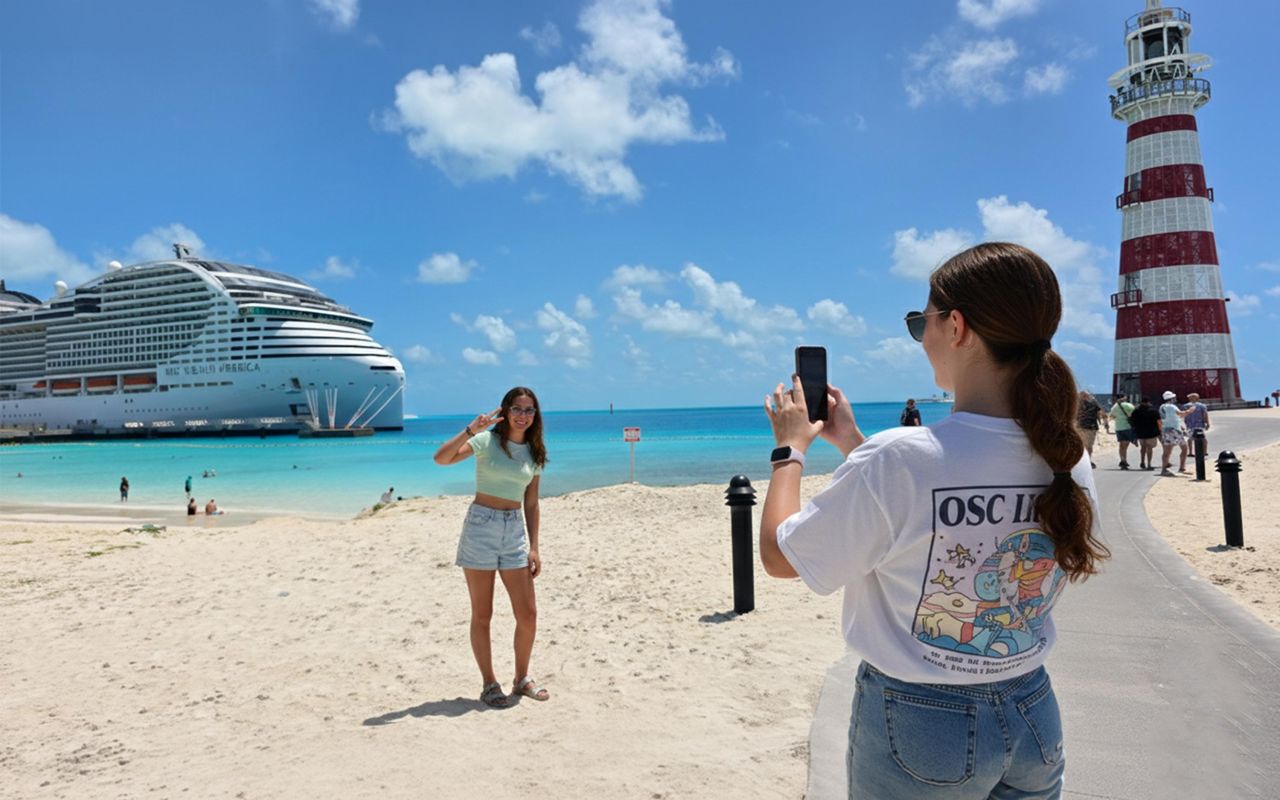
- Modern mega-ships like MSC World America and Icon of the Seas mirror what Gen Z loves about revitalized malls: atriums, food courts, entertainment venues, and social spaces designed for sharing.
- The intimate cruise experience isn't disappearing - it's splitting into two markets, and the mega-ship segment is purpose-built for a generation that will reshape travel for the next 40 years.
Article Index
I'll admit something: as a Gen X cruiser who came up on ships where you could walk the entire vessel in 10 minutes, my instinct was to see the mega-ship boom as oversaturation. But after months of tracking Gen Z behavior patterns - and watching Heather's friend's teenagers come home buzzing from MSC and Norwegian cruises - I realized I was asking the wrong question. It's not "who fills these ships?" It's "who are these ships actually built for?"
The $76 Billion Bet
The numbers are staggering. As of early 2026, the global cruise ship orderbook includes 74 vessels valued at over $76.5 billion, adding more than 205,000 berths through 2036. The average new ship costs over a billion dollars to build, with an average capacity approaching 2,770 passengers. In 2026 alone, 14 new ships worth approximately $11 billion will enter service.
Royal Caribbean just ordered its first two Discovery-class ships with options for four more. MSC and Norwegian each have 14 vessels on order. To industry veterans, it looks like oversupply. But Royal Caribbean's response speaks volumes: the company reported its best seven booking weeks in history heading into 2026, running about two-thirds booked at record rates. Someone is filling these ships - and they're getting younger every quarter.
The Mall Of The Seas (And Why That's Not an Insult)
Here's where things get interesting. Over the past year, data has quietly confirmed something that surprised a lot of people: Gen Z is bringing malls back from the dead. A survey by the ICSC found that Gen Z shops in-store as much as their Baby Boomer grandparents - more than Millennials or Gen X. The National Retail Federation reports that Gen Z's buying power is actively reshaping malls, with Kantar's David Marcotte describing a new commercial real estate trend of converting older properties into "Gen Z malls."
But they're not going to malls to buy stuff. According to Advertising Week, more than 60% of Gen Z visits malls to socialize, and 60% say they'd rather spend money on experiences than physical items. The mall has become a "third space" - a place to hang out, connect with friends, eat interesting food, and share the experience online. Now walk onto MSC World America or Royal Caribbean's Icon of the Seas. Multi-story atriums, food halls with dozens of options, retail promenades, arcades, movie theaters, concert venues - these aren't cruise ships that happen to have amenities. They're experience hubs that happen to float. The comparison to a modern mall isn't criticism. It's the business model.
I watched this play out through Heather's friend's family. Her teenagers came home from recent MSC and Norwegian cruises talking about the exact same things Gen Z loves about malls: the food options, the entertainment variety, the freedom to wander and do their own thing. Their parents loved it too - a safe, bounded space where the kids could have independence while Mom and Dad actually relaxed.
"What I'm hearing from families with teens and young adults is that these larger ships give everyone exactly what they want," says Heather Hills, travel advisor and owner of Flow Voyages. "Parents get peace of mind and time together. The kids get what feels like an entire city to roam - restaurants, entertainment, activities with other young people. It's the same reason a family trip to a great mall works: everyone finds their thing, and you come back together for the moments that matter."
A Generation Built for the Bow Wave
The demographic and economic data makes the industry's bet look less like a gamble and more like reading the room. According to NIQ and World Data Lab's "Spend Z" report, Gen Z's global spending power is projected to reach $12 trillion by 2030, surpassing Baby Boomers and making them the wealthiest generation in every region of the world. Bank of America projects this generation will amass $74 trillion in income by 2040. And they're spending it on travel - American Express research found that 79% of Gen Z and Millennials see leisure travel as a budget priority, with 84% choosing a vacation over a luxury item. A CivicScience report from 2025 found that 73% of Gen Z adults expressed interest in taking a cruise.
The cruise industry is already feeling this shift. CLIA's 2025 State of the Industry Report shows the average cruise guest age has dropped to 46.5, with 36% of all cruisers now under 40. Royal Caribbean's CEO Jason Liberty told investors that nearly one in two guests are Millennials or younger - an 11 percentage point gain compared to 2019. These aren't casual tourists testing the waters. This is a generational shift in who cruises and why.
What a Former Retail Executive Sees
I have a slightly different lens on this than most travel industry commentators. Before building FlowMediaMarketing, I led social media and influencer marketing for Sears Appliances and managed full-line brand marketing campaigns for both Sears and Kmart, and worked with retailers like Staples during the eCommerce transition. I watched from the inside as executives systematically dismantled the in-store experience - gutting the things that made physical retail compelling - because they were convinced the future was online-only.
They were catastrophically wrong. Not because eCommerce didn't matter, but because they assumed the physical experience was expendable. In my own backyard in the Great Lakes region, the evidence is everywhere. The malls in Toledo and St. Joseph/Benton Harbor aren't struggling - they're gone. Demolished. Some replaced by Amazon distribution centers, which is about as on-the-nose as metaphors get.
The cruise industry is making the opposite bet. They're pouring $76 billion into physical, experiential spaces designed for a generation that craves exactly that. Where retail executives stripped stores of personality, cruise lines are building ships packed with it. One group misread the consumer. The other is reading them correctly.
And frankly? The national data on Gen Z's mall revival gives me hope that it's not too late for physical retail either - even if my local evidence is grim. The desire to be somewhere, doing something, with other people - what Stanford research scholar Roberta Katz describes as Gen Z's appreciation for "face-to-face and one-on-one communication" - is exactly what a mega-ship delivers.
The Generation That Will Fix What We Broke
It's easy for Gen X and Boomer industry observers to look at 6,000-passenger ships and feel like something has been lost. I get it - I miss the Norwegian Windward days too. But that experience hasn't disappeared. It's alive on Viking Ocean ships, on Virgin Voyages, and across the growing luxury and expedition segments.
What's happening with mega-ships is something different and worth celebrating. A generation of nearly 2 billion people is entering their peak travel years with values that align almost perfectly with what cruise lines are building: social connection, experiential spending, shareable moments, and all-inclusive value. They'll reshape the cruise industry the same way they're reshaping retail and entertainment - by demanding that physical spaces actually deliver something worth showing up for.
The cruise industry's $76 billion bet isn't reckless. It's one of the smartest reads on generational behavior I've seen from any industry. Gen Z is going to fill those ships, bring their friends, post about it, and come back for more. And as their spending power accelerates toward $12 trillion, the lines that invested early in what this generation actually wants will be the ones that thrive for the next four decades.
About the Author: James Hills is the founder of FlowMediaMarketing.com and CruiseWestCoast.com, with 15+ years covering the intersection of travel marketing and consumer behavior. He previously led social media and influencer marketing for Sears and Kmart, giving him a unique lens on how industries respond to generational shifts. For media inquiries on cruise industry trends and Gen Z travel behavior, contact James at FlowMediaMarketing.com or Heather Hills, travel advisor and owner of Flow Voyages.
